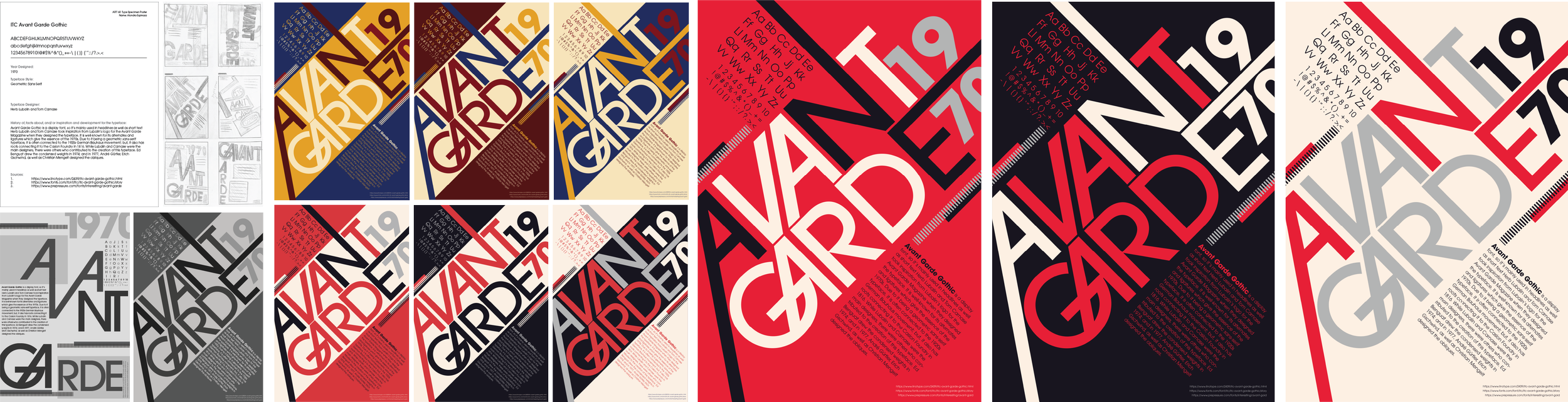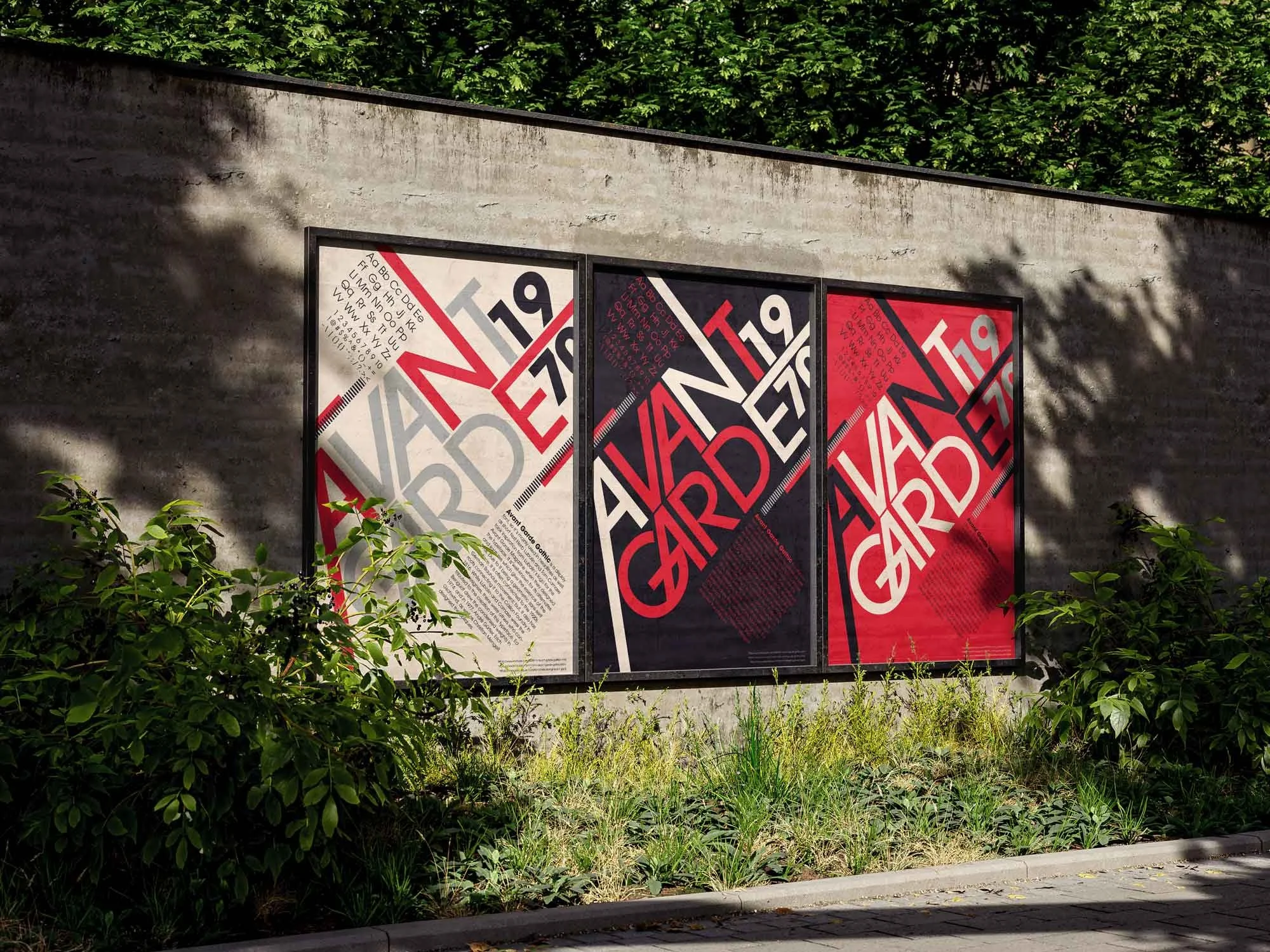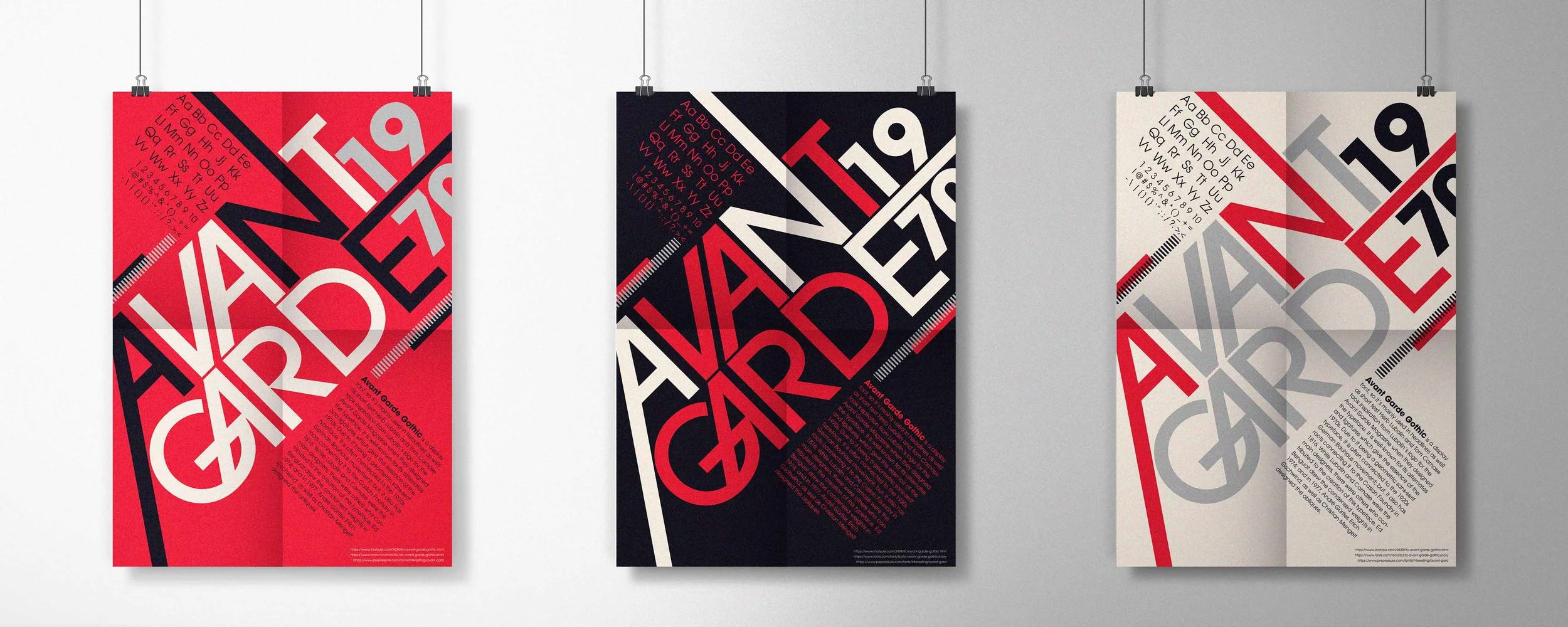
The goal of this project was to research the history and story behind a typeface and create a poster that would make use of the typeface’s key features. I chose the typeface, ITC Avant Garde for this project, and aimed to create a poster that utilized it’s slanted characters effectively.
Introduction
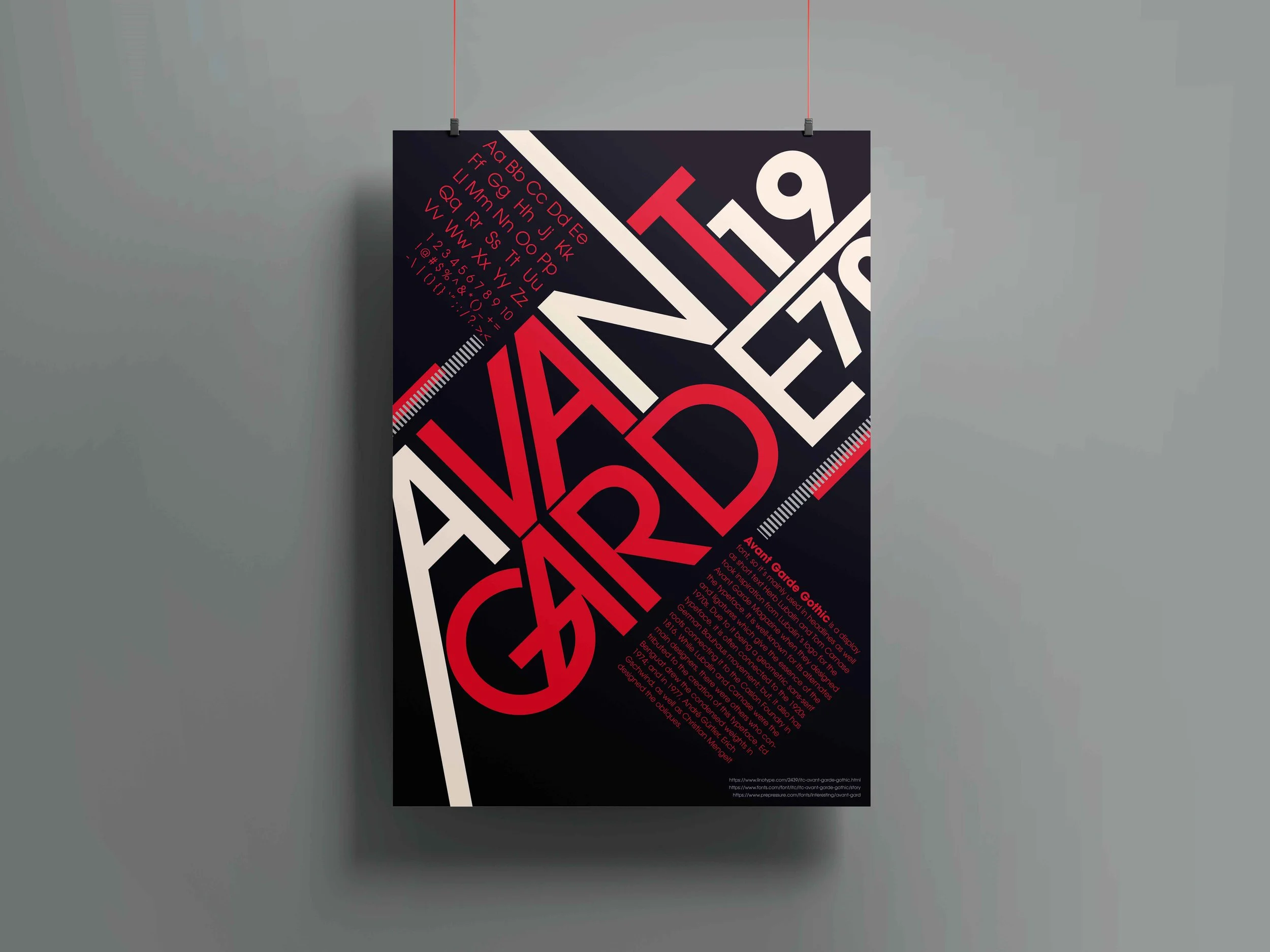
ITC Avant Garde is a display font designed by Herb Lubalin, in collaboration with Tom Carnase. It was originally created specifically for the Avant Garde Magazine before eventually being developed into a complete typeface that may be used for other purposes outside of Magazine Headlines. The typeface took inspiration from the Bauhaus movement of the 1920s where it took characteristics from the art movement, such as the sharp, geometric characters and simplistic style.
Herb Lubalin was a graphic designer whose work with type created a new height for how typography is used. Through his work on magazines, such as Fact, Avant Garde, and Eros, he created designs that were simple and focused solely on letterforms, using them in innovative and distinct ways. Some of his signature styles were that of using tight kerning, bold layouts, and use of minimal color. His work made it so typography could be used for more than reading purposes, giving it a more important role in the design field.
Brief History
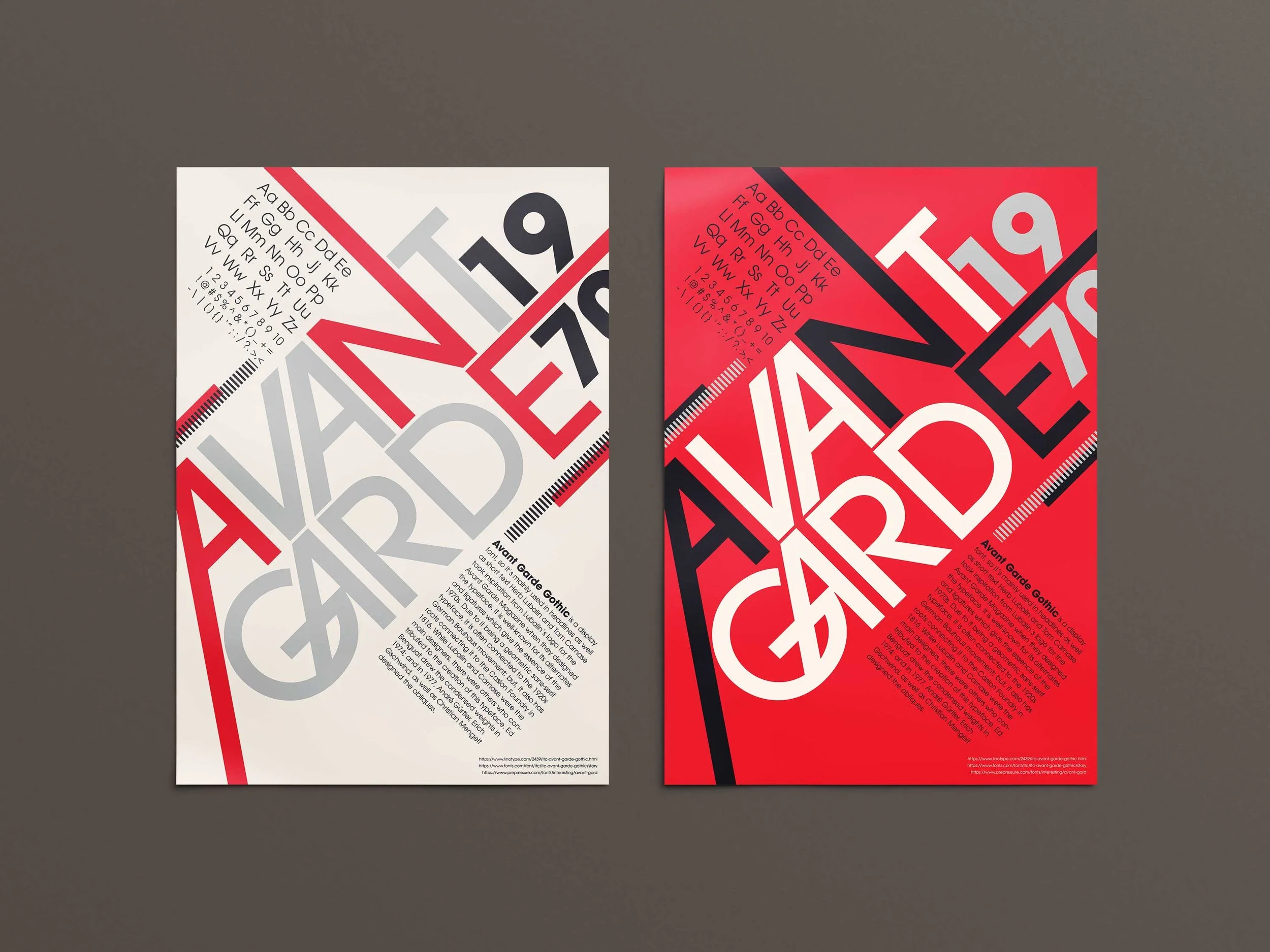
Challenge Design a poster that effectively utilizes the slanted characteristics of the Avant Garde typeface while incorporating visual elements that connect the design to Avant Garde’s Bauhaus history and influence.
Approach Using colors that fit the Bauhaus’ minimalist color palette combined with a layout that plays with the axis orientation of the typography, I developed a composition that emphasizes the movement and structure of the typeface’s characters. Bringing these elements together allowed me to create a visually engaging poster that reflects the principles of the Bauhaus while highlighting the unique features of the Avant Garde typeface.
Process
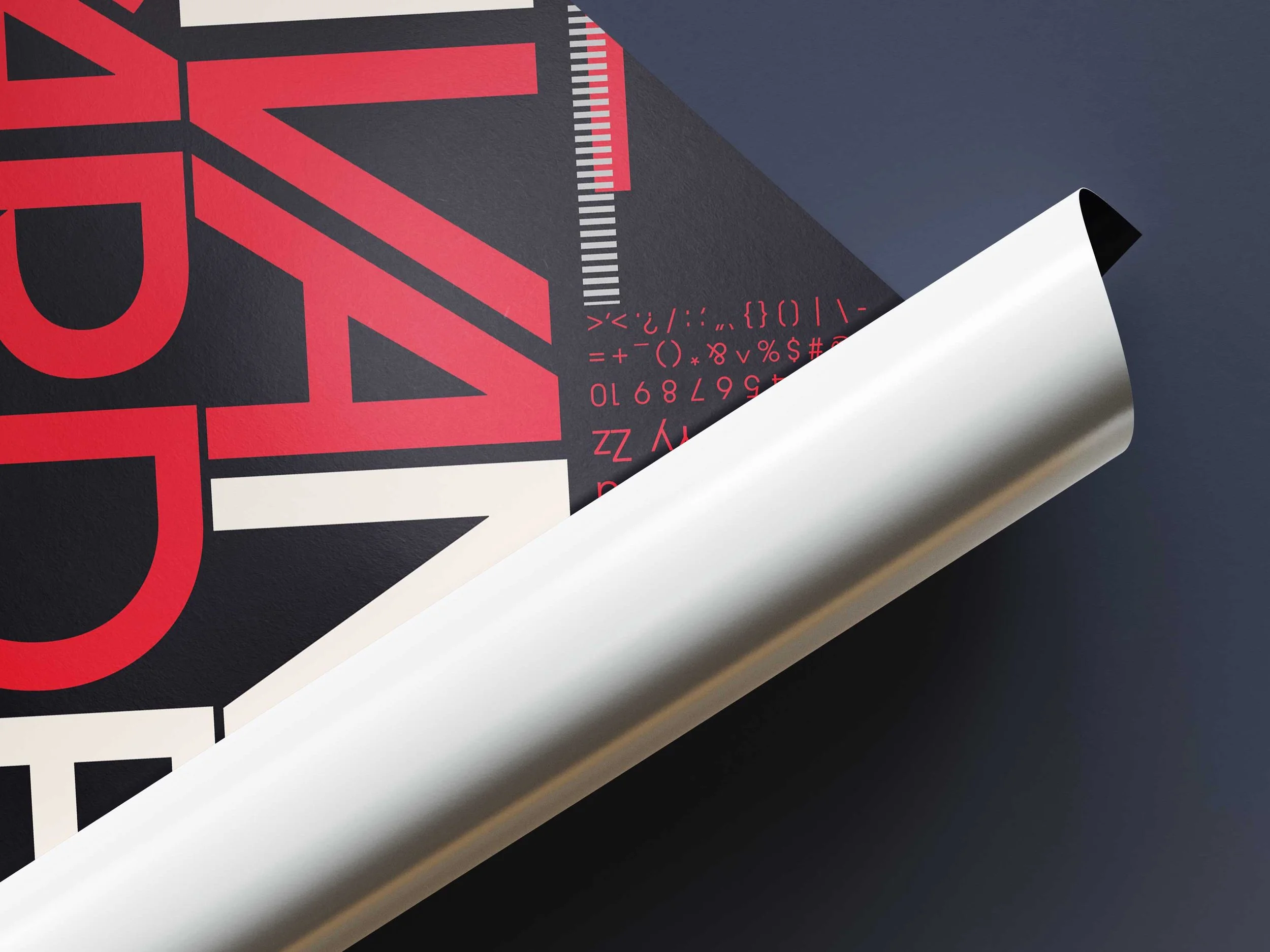
During my process, I researched the typeface, followed by developing sketches and creating digital iterations that would allow the characters to work as the main elements for the poster. I experimented with different color combinations, ultimately deciding that a palette that highlights the Bauhaus’ colors, from bright red to bold black, along with neutral tones of grey and off-white, was ideal as it connects the poster back to its origins.